×

eChinacities Job Search
The best China job app
Recently, the Chinese government announced that it is prepared to issue a new list of (simplified) Chinese characters. According to XinHua News,
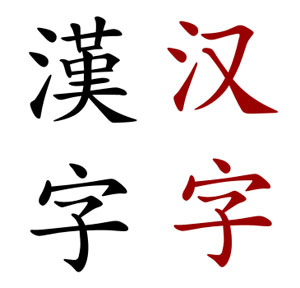
For the first time in nearly 20 years, China will issue a modified list of simplified Chinese characters in an effort to further standardize a language used by billions around the world.
Wang Ning, vice director with the Institute of Linguistics under the Chinese Academy of Social Sciences (CASS), said Wednesday at a CASS conference on Chinese culture that editing of the new list had already been completed and changes would be published “very soon”.
She did not give an exact date or tell Xinhua how the list would be made available.
“Over-simplification of some characters actually made them even harder to understand in some cases, which is the problem we are trying to address here,” Wang said.
She added, the new list would involve a rather small number of changes to characters currently in use. The goal is to make them easier to learn.
On Thursday, Wang Dengfeng, vice director of the State Language Commission, confirmed the Ministry of Education was about to issue a revised character list in the near future, but did not give a specific timetable.
“We are still working on it,” he said.
The Chinese mainland first introduced simplified characters in 1956. But Taiwan and the then foreign-controlled southern regions of Hong Kong and Macao retained the ancient traditional characters.
Simplified characters were created by decreasing the number of strokes to write.
In 1986, the State Language Commission issued a list of 2,235 simplified Chinese characters as a way to standardize the written form of the language.
However, some Chinese people on the mainland have recently called for the restoration of traditional characters for the purpose of “cultural preservation.”
Pan Qinglin, a political advisor from north China’s Tianjin Municipality, submitted a proposal to the annual session of China’s top political advisory body in March this year. Pan urged the country to abolish the use of simplified characters within ten years saying they sacrificed too much “artistic quality.”
Both Wang Ning and Wang Dengfeng stressed that the latest character modification had nothing to do with restoring traditional characters.
“Switching back to traditional Chinese characters means billions of Chinese would have to relearn their mother language,” Wang Ning said.
“I don’t think there is any need to switch back to traditional Chinese characters, nor to make the current ones even simpler. Our top priority is to improve and standardize the simplified Chinese characters,” she added.
When I first heard of “simplified” characters, I was still a child growing up in Taiwan. Even though I was just a kid, I remember clearly that it was cast in a very negative light. The communists were perverting our language. They were dumbing down the people so the people can be easier to control. A child like me would be severely beaten if caught to be writing simplified (even though the child probably learned simplified from adults who often wrote simplified in daily usage!).
I would learn that there were two types of simplifications. The first involved reduction of strokes. The second involved the consolidations of characters.
I am generally ok with the reduction of strokes - even though a lot of times, I feel the traditional versions are often aesthetically more pleasing than the simplified form.
But sometimes I do have a problem - especially when characters have been simplified in a way that loses their symbolic root. For example, the simplified character of love 爱 is missing the character “heart” 心. How can you simplify a character like love 愛 by getting rid of the heart?
I also have many problems with consolidations of characters in general. For example, the character 後 (behind) has been merged with 后 (queen) simply because 后 is easier to write and share the phonetic intonations of hou with 後. The unrelated words of 發 (fa, “happening”) and 髮 (fa, “hair”) have been merged simply into one new word with a similar sound 发. Similarly, 隻 (zhi, a measure word relating to things such as animals) and 只 (zhi, “only”) have been merged into 只, 穀 (gu, “crop”) and 谷 (gu, “valley”) have been merged into 谷 - all simply for phonetic reasons.
For a while, ex-Shanghai mayor Zhu Rongji’s name 朱镕基 was allegedly not officially recognized because for a time, the Chinese government had recognized only the character 熔 (rong) but not 镕 (rong) - which had a completely different radical. I think it was partly after Zhu persisted in signing his name as 朱镕基 (because he said that was the name he was given) that the government later recognized the character 镕.
The NY Times recently featured a story of a Chinese woman whose name was officially not sanctioned because the government-sanctioned simplified set of characters did not include one of the characters in her name.
The Chinese character has definitely been under attack this last century or so. For much of last century, the complexity of the written script had been blamed for holding China back (see, e.g., this curious NY times article from the early 20th century). Mao himself thought the Chinese characters would eventually be replaced by pingyin.
But now that finally China is more confident of itself and the future, where do you think the Chinese character would go?
In a digital age where we type more than handwrite, is simplification still important? How should the characters evolve?
For mainlanders here, did you ever have to compromise on your name (or your child’s name) because the officially sanctioned list of Chinese characters did not include a character you were given or you like?
Finally - do you think simplification of characters is an offense to the Chinese heritage or is it a natural evolution of the Chinese culture?
Fool's Mountain
Warning:The use of any news and articles published on eChinacities.com without written permission from eChinacities.com constitutes copyright infringement, and legal action can be taken.
All comments are subject to moderation by eChinacities.com staff. Because we wish to encourage healthy and productive dialogue we ask that all comments remain polite, free of profanity or name calling, and relevant to the original post and subsequent discussion. Comments will not be deleted because of the viewpoints they express, only if the mode of expression itself is inappropriate.
Please login to add a comment. Click here to login immediately.




 Sign up with
Google
Sign up with
Google