×

eChinacities Job Search
The best China job app
A surge in Indian visitors to China is being met with a wave of AI-generated misinformation online, with fabricated videos falsely depicting Indian tourists as dirty, disruptive and disrespectful. The fake clips have emerged as China and India continue to thaw diplomatic relations, with Beijing issuing more than 85,000 visas to Indian nationals in the first quarter of 2025 and restoring direct flights between the two countries.
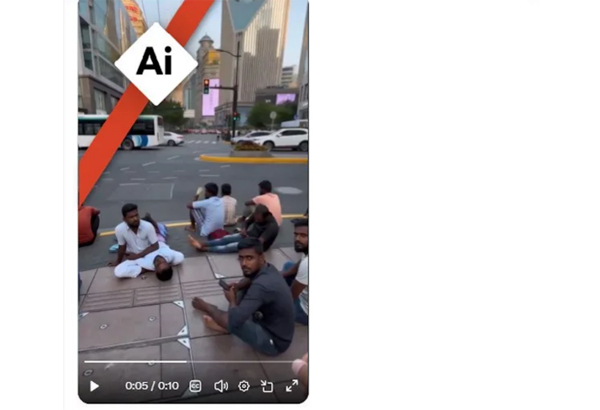
But as travel rebounds, fact-checkers say generative AI is being used to fuel anti-Indian sentiment on Chinese social media, raising fresh concerns about how convincing fake content can shape perceptions of foreigners.
The latest example, debunked this week by AFP Fact Check, involved a viral video that purported to show Indian tourists sitting on a pavement in Shanghai while a narrator complained they were "making a total mess" of the city. The clip was shared across social media platforms with captions claiming Indian visitors were behaving "lawlessly" in China.
AI, Not Reality
AFP's investigation found multiple signs that the footage had been generated using artificial intelligence. People appeared to merge into one another, traffic lights displayed contradictory signals, vehicles disappeared mid-frame and shop signs were unreadable. An AI detection tool also concluded the clip was likely synthetic.
The Shanghai street scene is just one of several fabricated or misleading videos circulating online. AFP also identified AI-generated clips accusing Indian tourists of disturbing public order, mocking the way they eat or falsely claiming they had travelled to China simply to escape India's summer heat while enjoying China's air conditioning.
The use of generative AI appears to be adding a new dimension to existing prejudices. Rather than relying solely on edited or misleading real footage, creators are now able to fabricate entirely fictional scenes that appear convincing at first glance.
The eChinaCities Take
Most foreigners in China are familiar with stereotypes directed at different nationalities, both online and offline. While the overwhelming majority of Chinese interactions with overseas visitors remain positive, social media can amplify extreme or prejudiced views far beyond their real-world prevalence.
As AI tools become more sophisticated, fabricated videos risk reinforcing negative stereotypes and fuelling unnecessary tensions between communities. The AFP investigation is a timely reminder to treat sensational videos with caution — especially those that appear designed to provoke outrage or target a particular nationality.
In an era where convincing fake footage can be produced in minutes, a healthy dose of scepticism is becoming just as essential as a VPN for navigating life online in China.
Warning:The use of any news and articles published on eChinacities.com without written permission from eChinacities.com constitutes copyright infringement, and legal action can be taken.
Keywords: Anti-Indian China Anti-Indian video Shanghai
All comments are subject to moderation by eChinacities.com staff. Because we wish to encourage healthy and productive dialogue we ask that all comments remain polite, free of profanity or name calling, and relevant to the original post and subsequent discussion. Comments will not be deleted because of the viewpoints they express, only if the mode of expression itself is inappropriate.
Please login to add a comment. Click here to login immediately.



 Sign up with
Google
Sign up with
Google