×

eChinacities Job Search
The best China job app
Graduation Day – for many, this is a time to celebrate the culmination of four years hard study, it is a right of passage into the bigger wider world of gainful employment. In theory, graduating from university should be one of the most special days in anyone's life. Spare a thought, though, for the 6 million Chinese students set to leave the ranks of academia in 2009. For them, the picture is far from rosy. In the current financial malaise, their employment prospects are bleak, to say the least.
Graduate Gloom
Even before the onset of the global financial crisis, the graduate employment market in China was fiercely competitive. The expansion of higher education in China, which first started in the 1990s, created a growth in the number of graduates that, even in prosperous times, the economy could barely keep pace with. As I mentioned a few weeks ago, in 2007 universities in and around Beijing produced just under 200,000 graduates, of which barely half could expect to find a suitable graduate level position. Now, with headcounts shrinking and many organizations freezing recruitment, the situation is getting worse, much worse. Even Vice-Premier Zhang Dejiang admitted as much in a speech made to the State Council, when he said, “The employment situation of college graduates remains grave.”
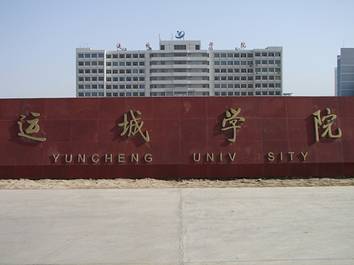
Photo: Helga’s Lobster Stew
Across China, the statistics make bleak reading for graduates. Ding Xiangyang, Vice-Mayor of Beijing recently announced that the city expects 210,000 students to graduate in 2009, a number which – as in 2007 - far exceeds the amount of jobs offered. Those graduates will not only have to compete with each other, but also the tens of thousands of others who graduated in 2008 and 2007, but failed to find jobs. The Ministry of Human Resources and Social Security estimates that, last year, across China, 1 million students failed to find employment after graduating. In Shanghai, the situation is similarly worrying. The number of graduates is on the rise, but the number of jobs available to them is nose-diving. A recent survey by Shanghai Foreign Services Company revealed that 55% of multinational companies in the city will not be hiring fresh graduates in 2009. And, half of those that will be hiring will have room for less than 10 new hires.
Light at the End of the Tunnel?
The picture I am painting here is an overwhelmingly gloomy one. But, are there any chinks of light for China's graduates? There are, but, sadly, they are only the faintest of glimmers. Aware of the critical situation at hand, authorities in Beijing have begun a recruitment drive to help students. Ding Xiangyang recently announced plans to hire 2,000 fresh graduates as social workers and a further 3,000 as teachers. However, in the same announcement came tacit admission that the situation may be beyond the authorities control as he detailed plans to create a further 10,000 places in universities around the capital for post-graduate study to help alleviate the unemployment figures. Yuan Shiwei, a top professor at a major university in Beijing highlighted the temporary nature of these measures in an interview with China Daily, “The initiative is a temporary arrangement to ease the employment-related tension of college students in the context of the economic crisis,”
The example set by Beijing is indicative of the situation as a whole around China. With the majority of multinationals no longer hiring anywhere near enough graduates to make a difference, the onus has fallen on smaller local businesses and the government to try and take up some of the shortfall. The Ministry of Education will be continuing to push the 2006 initiative it created to recruit graduates unable to find jobs in major cities to teach in rural areas. And, the Ministry of Human Resources and Social Security has also encouraged local authorities to hire as many graduates as possible and will provide subsidies for graduates who agree to work in grassroots areas.

Photo: peiqianlong
Go West
Such government projects will provide much needed employment for many. However, after four years of toil, many graduates will not be keen on the idea of moving to rural areas to pursue a career or to work at grassroots levels. Many see a role with a major company in cities like Beijing, Shanghai or Guangzhou as the natural reward for their years of study. Unfortunately, for most, this will be little more than a dream. A move away from the big cities may actually increase their chances of landing a job. A recent survey by Manpower found that major east coast cities are seeing either little growth in graduate opportunities or a marked decline. It predicts that Beijing will have 3% more graduate roles than last year, Guangzhou will have 1% more and Shanghai will have 4% less. Many cities further west on the other hand, will have significantly more roles than last year. Chengdu will have 16% more and both Xian and Wuhan will have 11% more.
No matter how we look at it, 2009 will be tough for China’s graduates. A choice few will be able to find jobs in major companies in big cities. However, for thousands of others, the outlook will be frightening. They will face the choice of fighting over job scraps in Beijing and Shanghai, or searching for opportunities elsewhere, in slightly less glamorous locales.
***
ChinaMedia > 33 year old CEO valued as multi-billionaire
Biz China > An insight into doing business in China
Biz China > Hong Kong, Shenzhen and Shanghai Listed as the Most Competitive Cities in China
Warning:The use of any news and articles published on eChinacities.com without written permission from eChinacities.com constitutes copyright infringement, and legal action can be taken.
All comments are subject to moderation by eChinacities.com staff. Because we wish to encourage healthy and productive dialogue we ask that all comments remain polite, free of profanity or name calling, and relevant to the original post and subsequent discussion. Comments will not be deleted because of the viewpoints they express, only if the mode of expression itself is inappropriate.
Please login to add a comment. Click here to login immediately.




 Sign up with
Google
Sign up with
Google